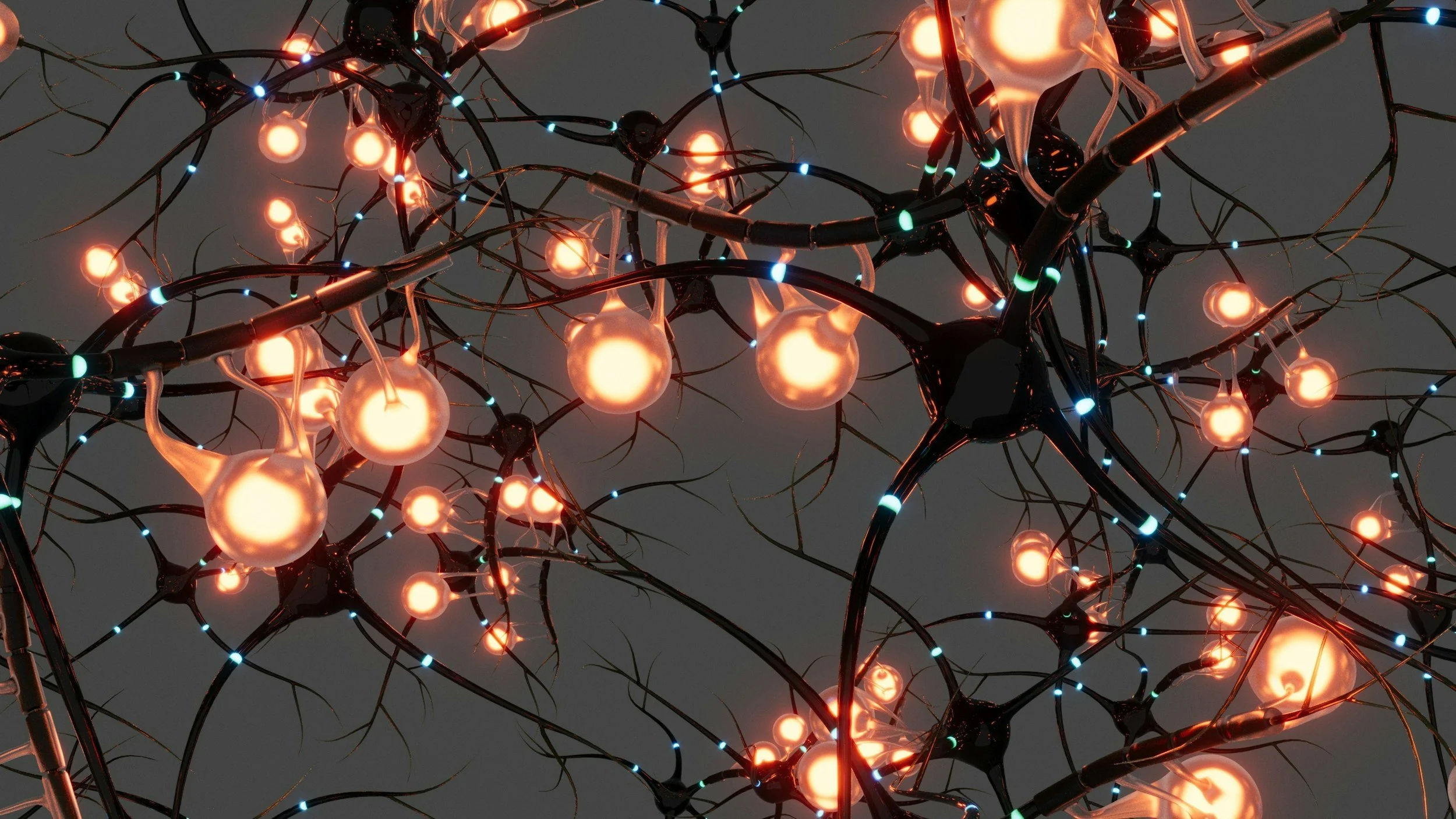
Neuroscience Lecture: Neurons & Action Potentials
Designing an approachable introduction to neuroscience for upper-division biology students.
Role:
Lecturer and Instructional Designer

Tools
Microsoft PowerPoint

Deliverable
90-minute neuroscience guest lecture and presentation

Audience
Upper-division undergraduate cell biology students

Goal
Help students build a clear foundational understanding of neuron structure, membrane potential, and action potentials without assuming previous neuroscience coursework. The lecture also needed to be appropriately paced for a 90-minute class period, with enough time for students to process new information and ask questions.
Challenge
The audience was an upper-level cell biology class, so students had strong biology backgrounds but could not be assumed to have prior neuroscience knowledge. The challenge was introducing neuron structure and action potentials in a way that was accurate, approachable, and connected to concepts they already understood from cell biology.
Because the course covered a wide range of topics, the neuroscience content also needed to function as a focused introduction rather than a detailed exploration of every nuance presented in the textbook. The goal was to identify the most important foundational ideas and present them in a way that students could reasonably understand within a single class period.
Approach
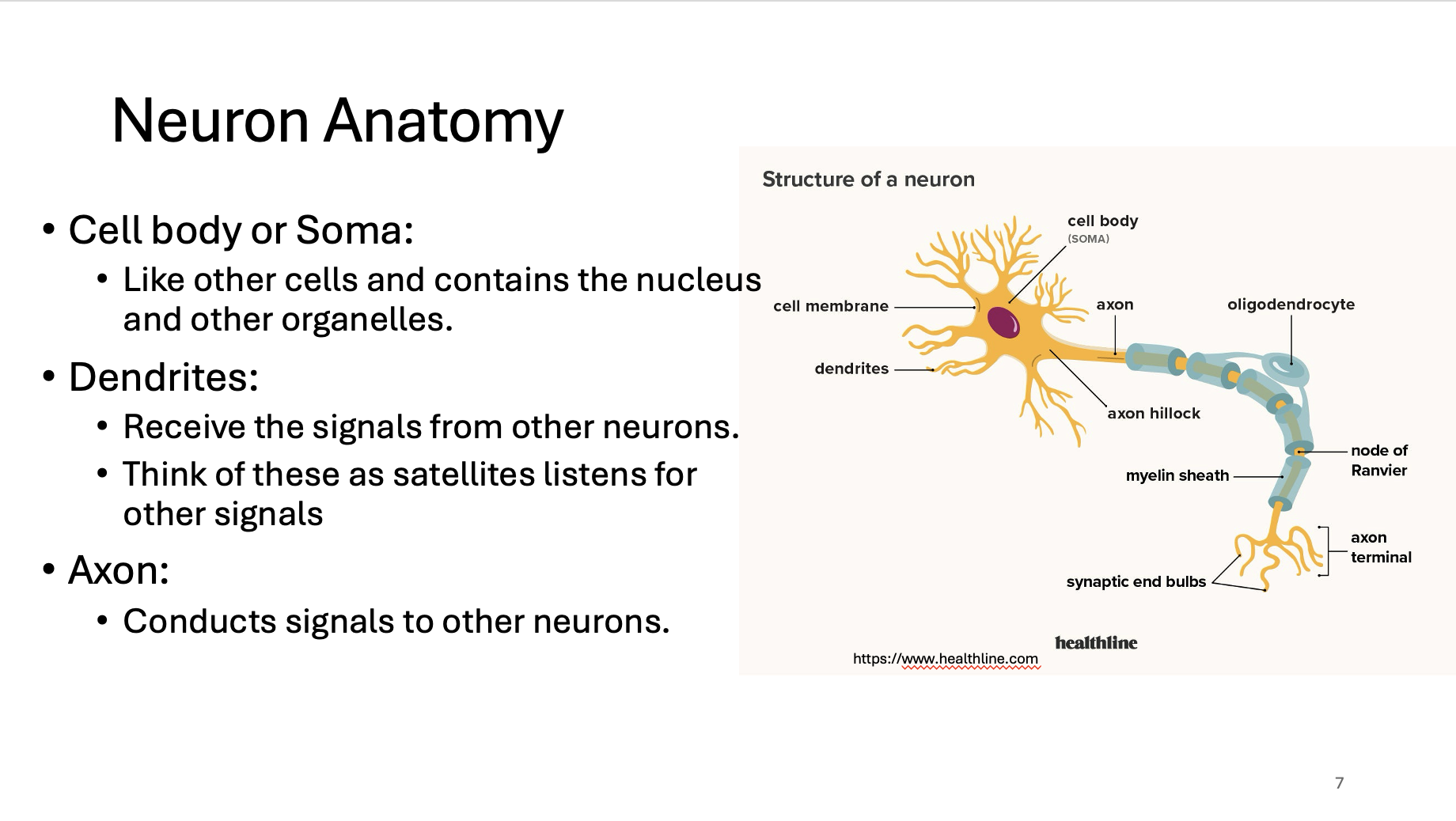
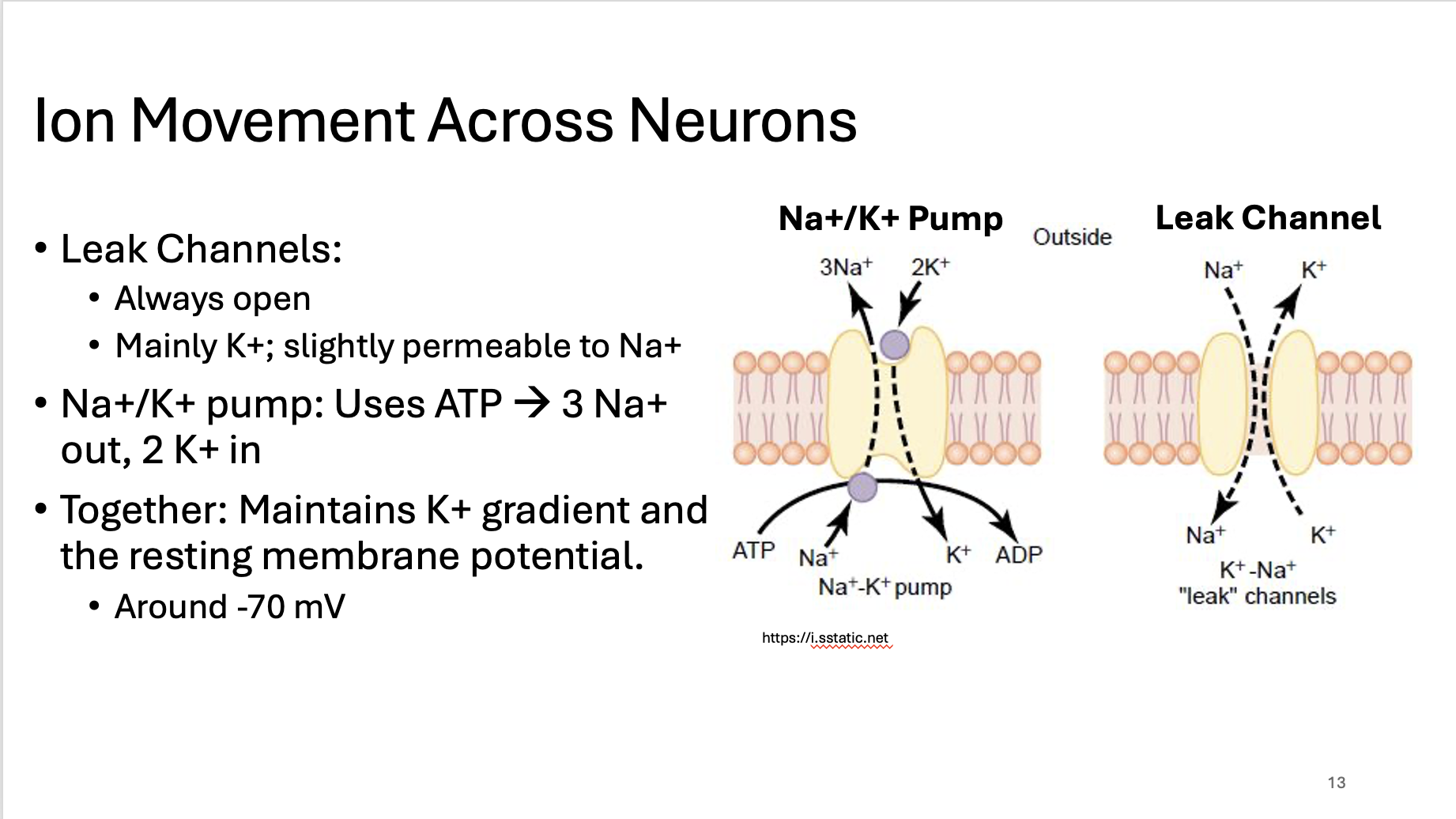
I designed the lecture in PowerPoint and organized the material into smaller sections that gradually built from basic neuron structure toward membrane potential and action potentials. Key terminology was introduced before it was used in more complex explanations, and neuroscience concepts were connected back to familiar cell biology principles whenever possible.
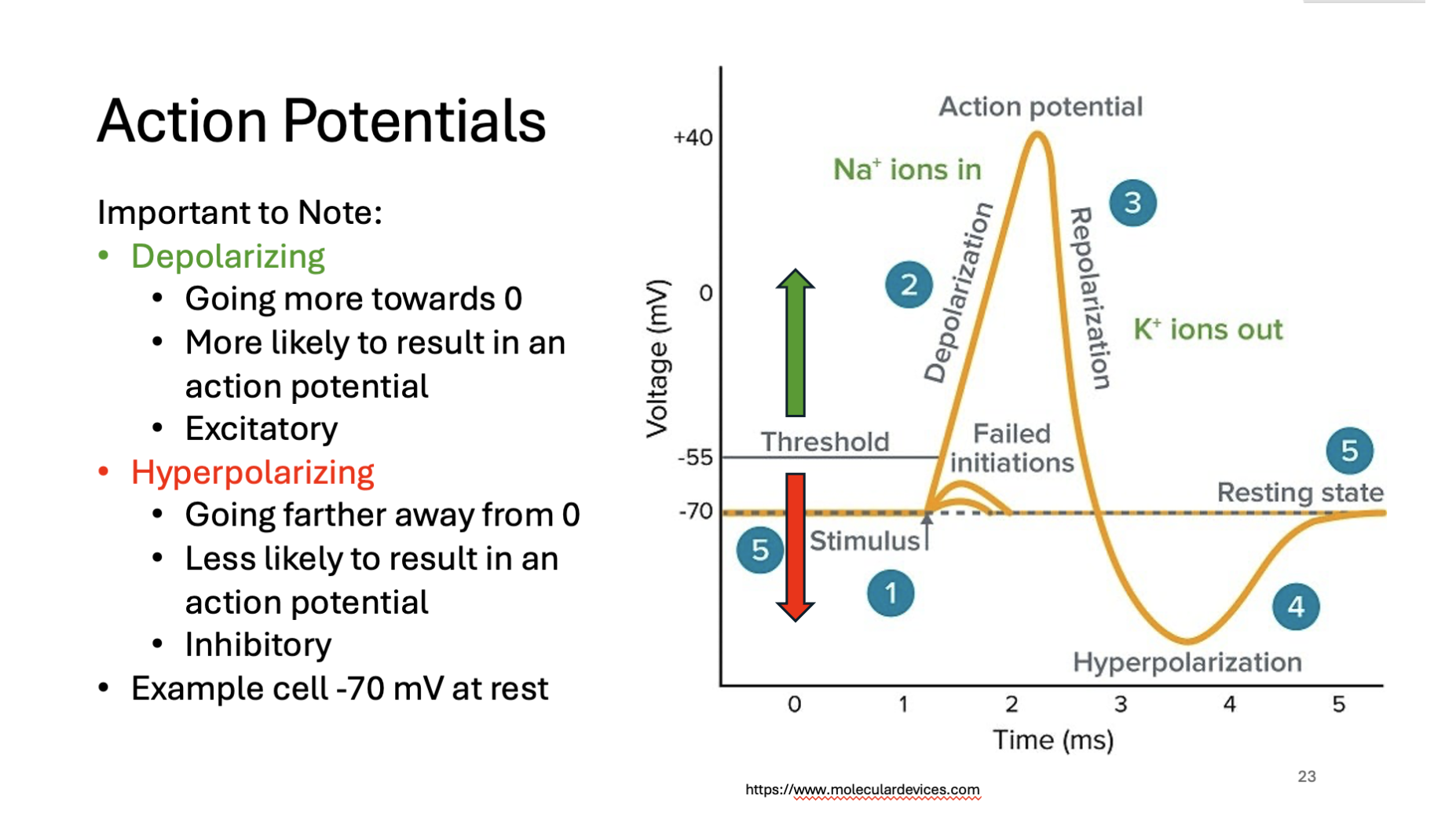
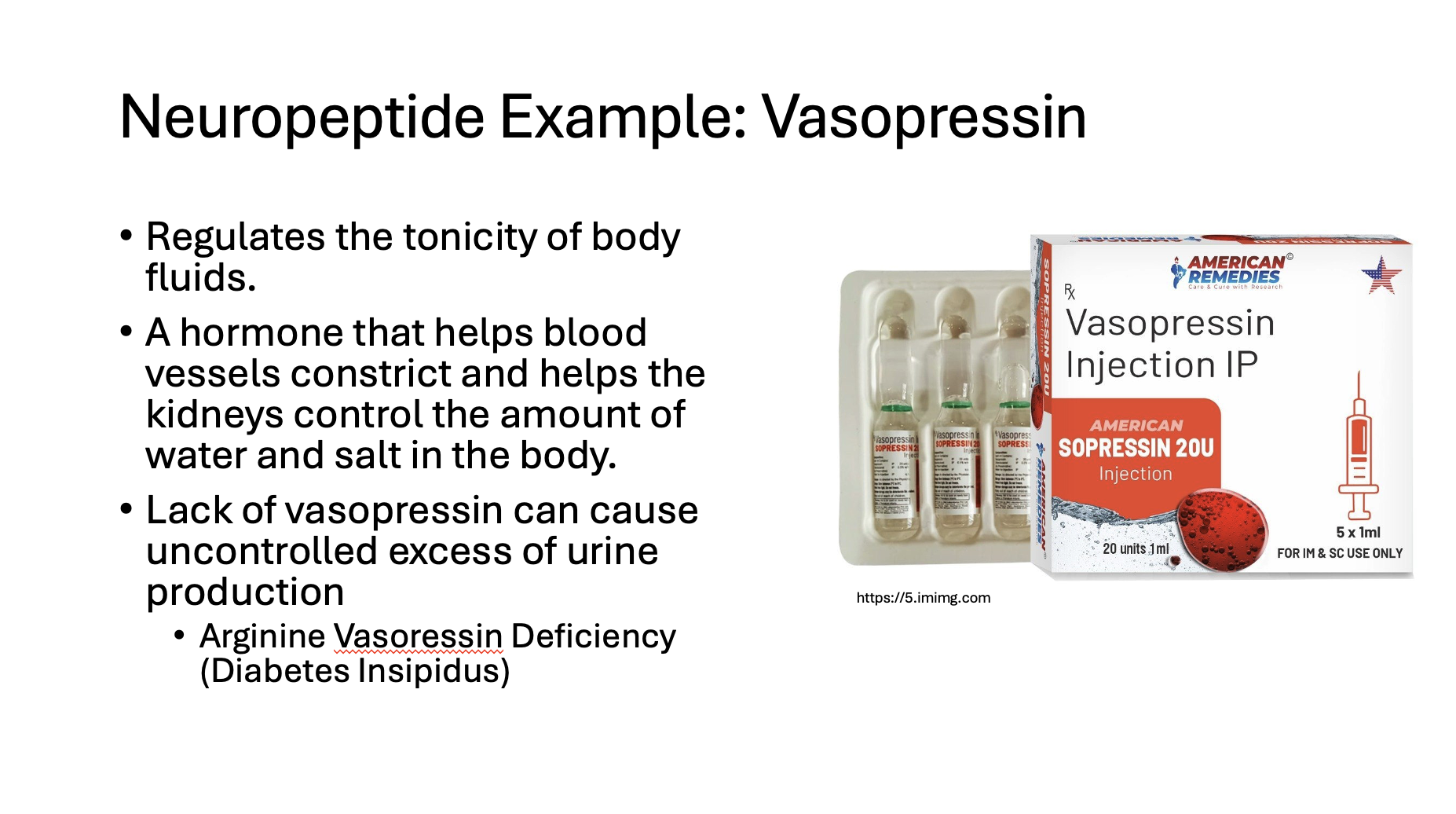
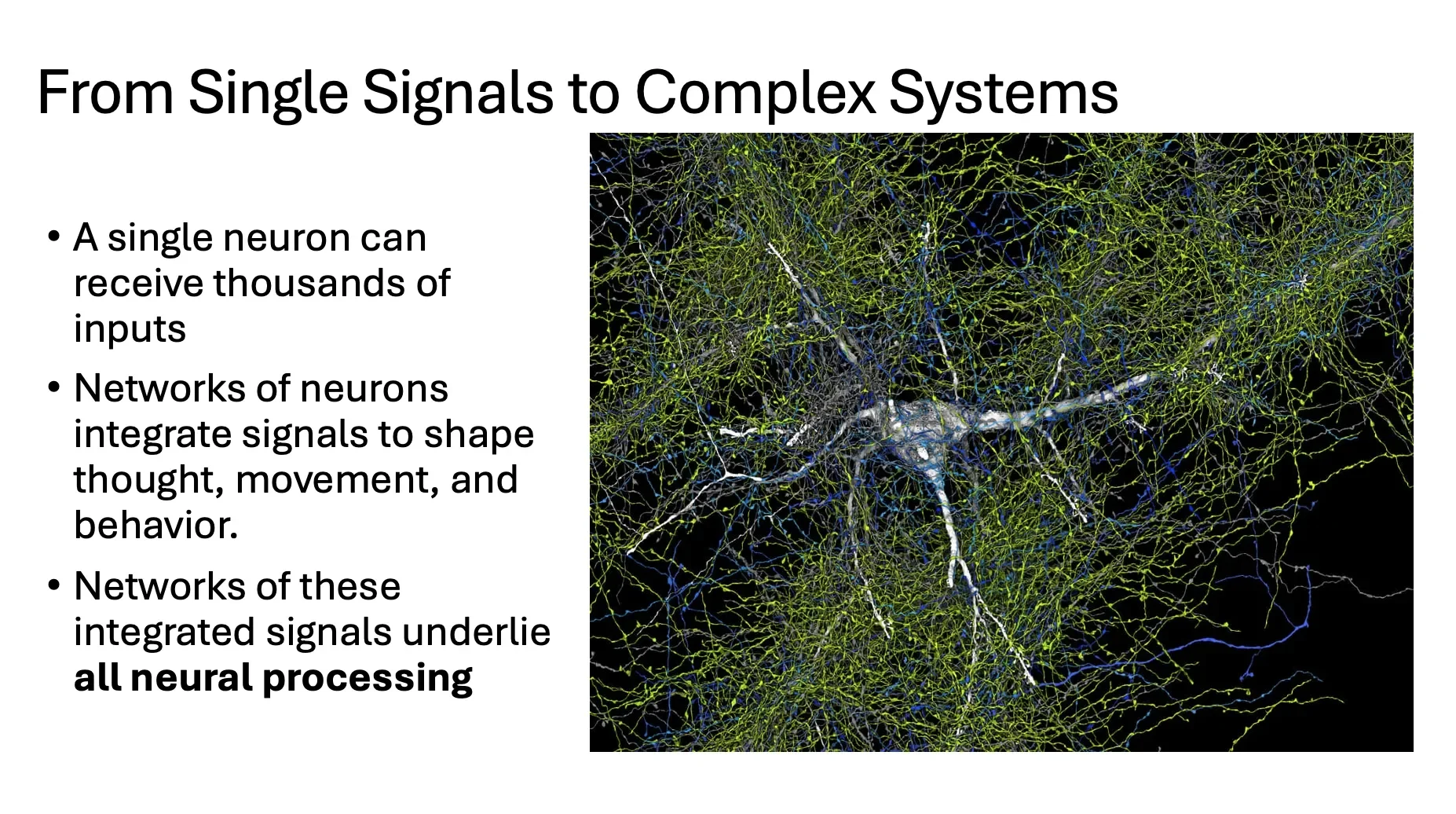
I incorporated diagrams, videos, real-world examples, and analogies to make unfamiliar concepts easier to understand. Review slides and intentional pauses were also built into the presentation to give students opportunities to process the material, revisit key ideas, and ask questions before moving forward.
What I Created
An original 90-minute guest lecture and accompanying PowerPoint presentation introducing neuron basics, membrane potential, action potentials, and basic neurotransmitters to upper-level cell biology students.
Design Decisions:
Build on Prior Knowledge
Connected unfamiliar neuroscience concepts to cell biology principles students already understood.
Make Complex Processes Visible
Used diagrams, images, videos, and limited on-slide text to help students visualize dynamic processes such as membrane potential and action potentials.Create Space to Process
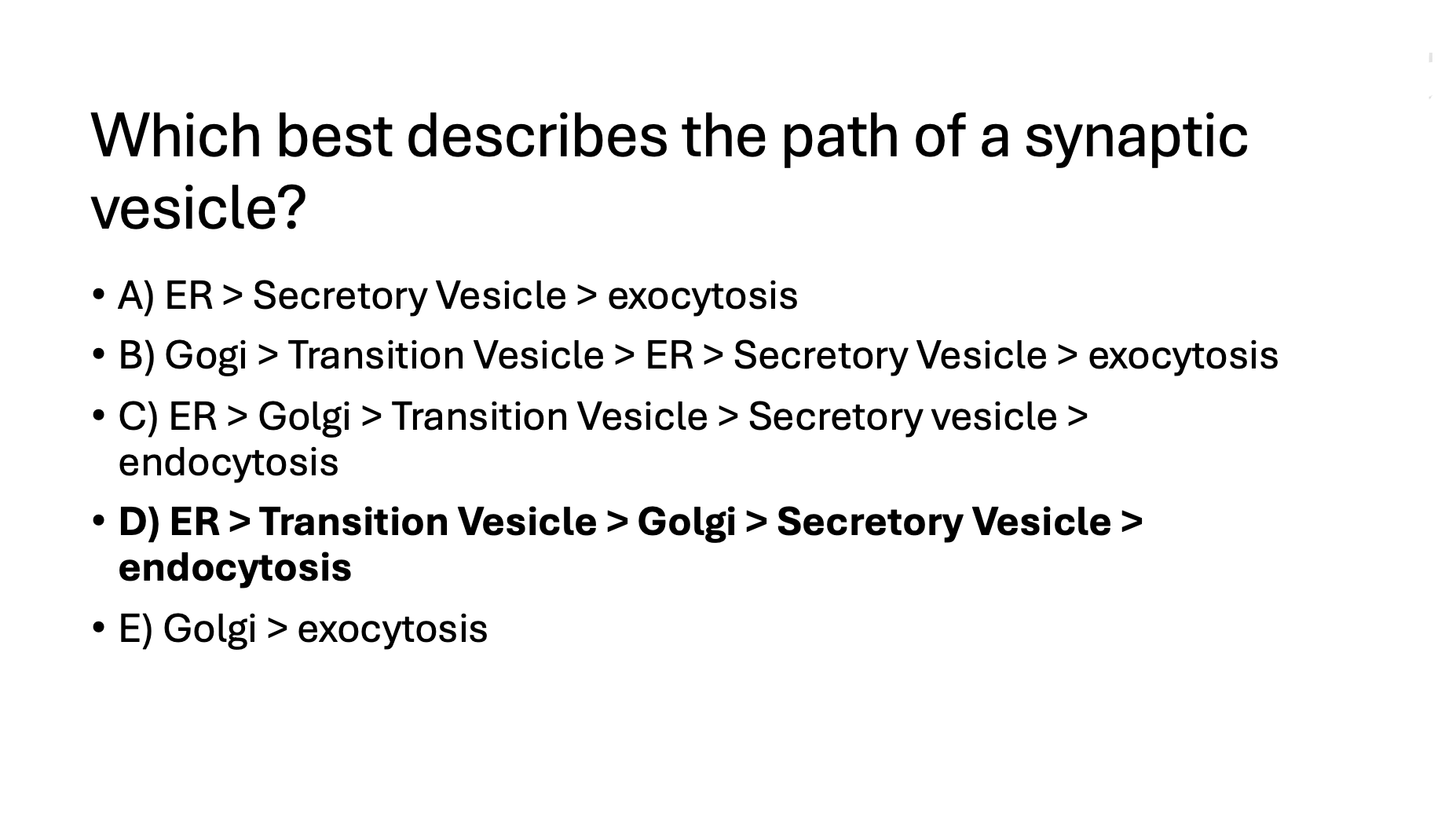
Built in review points, practice questions, and opportunities for students to pause, ask questions, and consolidate ideas before moving forward.
Optional Next Steps
If I delivered this lecture again, I would gather student feedback and review performance on related exam questions to identify concepts that may need clearer explanations or additional reinforcement. I would use those findings to refine the pacing, visuals, examples, and balance of content while also evaluating whether assessment questions accurately measured student understanding.
Future iterations could also include short knowledge checks or interactive activities throughout the lecture to identify misunderstandings before students reach the exam.